Walk the MLS sheet for any of Florida's major oceanfront markets and the residences begin to read alike. A frontage number. A bedroom count. A square footage. A price. The numbers that make one lot worth twice another rarely appear on the sheet, most of them are properties of the land, not the building. The architecture lives on top of the lot. The lot lives in the ground, and there are no edits.
The companion piece to this one, What Makes a True Oceanfront Estate, sets out the framework: read the lot first, the architecture second, the details third. This piece applies that framework end to end to a single real lot, so the method has something concrete underneath it.
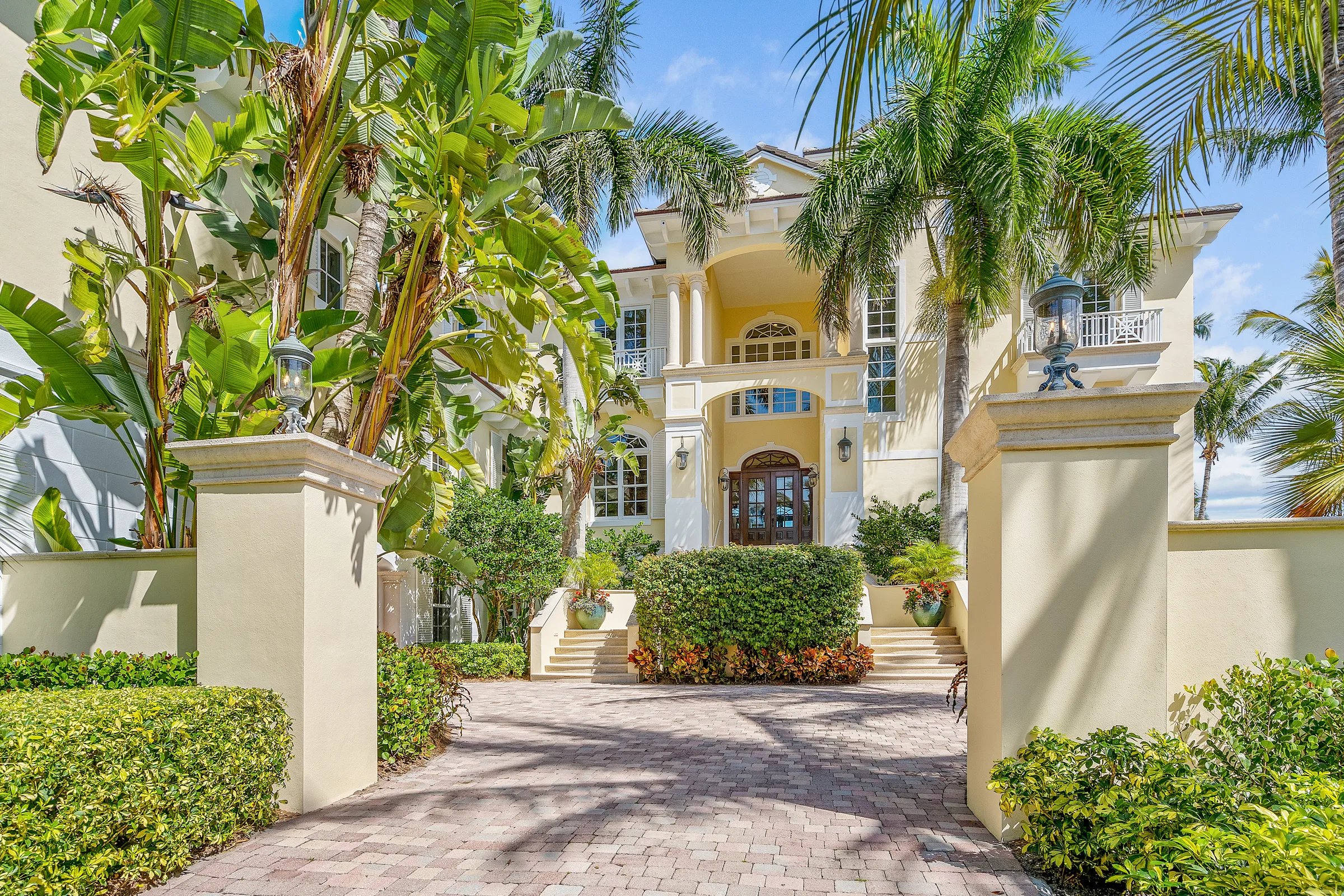
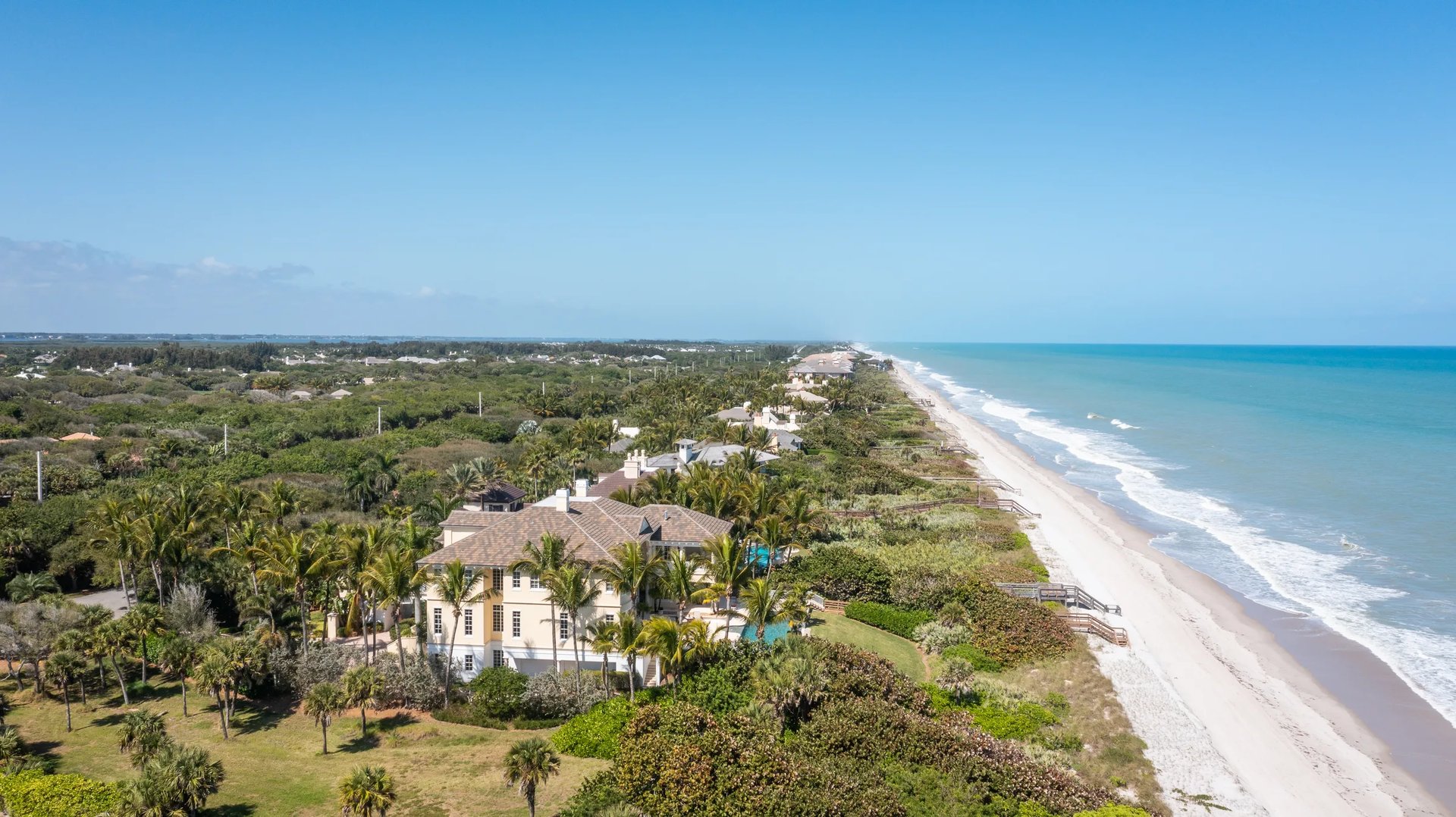
211 Beachside Drive sits on 1.27 acres at the south end of the oceanfront row on Orchid Island. The numbers the MLS gives you are 122 feet of direct Atlantic frontage, 55,321 square feet of land, and 11,604 conditioned square feet of residence. Each of those numbers is the doorway into something more specific, and each of them matters in a way the placard doesn't ask you to consider.
Ocean frontage
122 ft
Lot depth
~450 ft
Lot area
1.27 ac
“The architecture lives on top of the lot. The lot lives in the ground, and there are no edits.”
Frontage
The first thing to read on any oceanfront lot is the frontage, the length of the lot that fronts the water. Here, 122 linear feet of dune line. It is the dimension that determines how much ocean is visible from the residence, and how the residence itself can sit on the land.
Many Florida oceanfront lots are carved narrower than this. The reason is straightforward: oceanfront land is sold in linear-foot units, the supply is fixed, and developers tend to carve the row into the smallest pieces a buyer at a given price will accept. A narrow lot forces the residence into one of two compromises. Either the building is angled to fit a long-and-narrow plan running inland from the dune, which leaves the great room facing the water at an angle rather than straight on. Or the building is widened to fill the lot's full width and runs only one or two rooms deep, which puts every room within five feet of a neighbor's window.
A 122-foot frontage permits a different plan. The building can sit with a centered axis pointing directly at the water. The great room can have a true broadside to the ocean, a wall of glass, not a corner, and the rooms behind it can stack inland without compromising the principal volume's relationship to the view. McDonald Properties built to that geometry: a centered presentation from a lot wide enough to deserve it.
Frontage is what the brochure leads with. The rest of what determines a lot's value sits in dimensions the brochure usually skips.
Depth
The second dimension to read is depth: the distance from the dune line back to the property's inland boundary. This lot carries roughly 450 feet of depth on its 1.27 acres. That depth is what makes the residence's program possible without compromise.
A shallow lot forces three things to share the same back-of-house square footage: the pool deck, any outdoor entertaining surfaces (a summer kitchen, a long table under a covered lanai), and the dune crossover that walks the residents from the house to the beach. On a shallow lot you can have any two of those three; the third tends to get cut. The pool ends up small. The summer kitchen ends up in the garage. The dune crossover ends up doubling as the pool walkway, which means the wet swimsuits and the sand from the beach travel the same surface as the cocktail-hour traffic.
Here the depth is enough that the pool deck, the summer kitchen and lanai, and the boardwalk through sea grape and palmetto to the dune each get their own real estate. The dune crossover is a separate path. The pool's infinity edge faces the Atlantic with nothing behind it but the dune itself. The summer kitchen sits inboard of the pool, under the columned lanai. None of those volumes are negotiating for the same square footage.
Wide-and-shallow lots are common on barrier islands. Wide-and-deep lots are rare. The ratio here, roughly 122 feet wide to 450-plus deep, is what makes the program read as a residence rather than a series of compressed compromises.
Position on the row
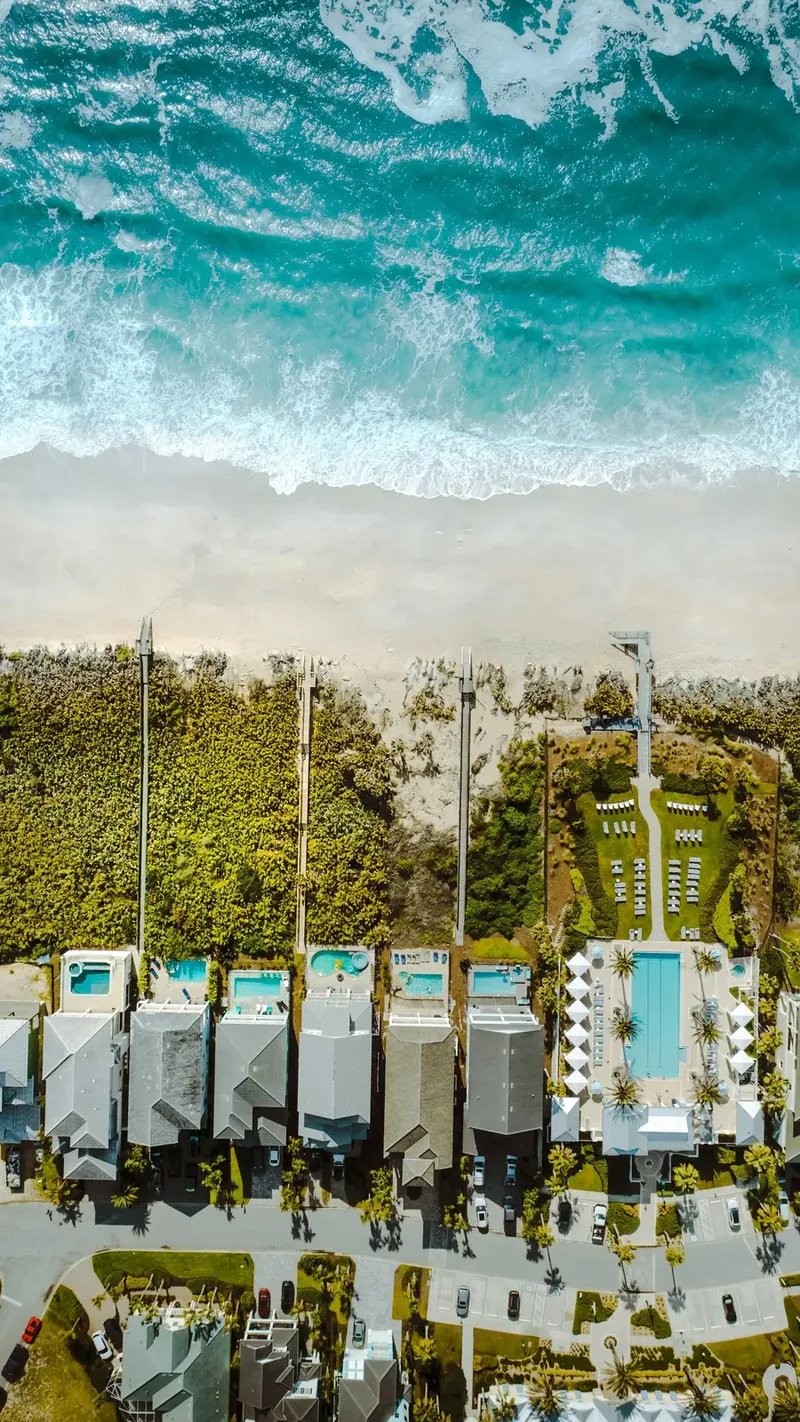
The third dimension is position. Where the lot sits within the oceanfront row at the community determines its privacy and traffic exposure: how much foot and golf-cart traffic passes the property, how exposed the dune crossover is to view from neighboring residences, how the principal entertaining spaces feel at sunrise on a Saturday in February.
This lot sits at the quiet end of Beachside Drive, the south end of the oceanfront row. The position matters because the practical effect of being at the end of a row, rather than in the middle of it, is that the principal axis of the residence faces shoreline rather than the back of a neighbor's pool deck. The MLS does not tell you which end of the row a lot sits at. The lot survey does, indirectly, but only if you can read it.
Quietness in a luxury community is not a marketing word. It is the difference between the principal living spaces being a venue for the household and being a venue for the household plus the cars and carts passing the gate.
The setting
The fourth dimension is the broader site: what surrounds the property at the community and regional scale. Orchid Island is a gated barrier-island community between the Atlantic Ocean and the Indian River Lagoon 12. The residences along Beachside Drive are the ones that front the Atlantic directly.
Most barrier-island lots in Florida offer either ocean or lagoon orientation but not both. Orchid Island's geography, the island is narrow enough that the lagoon is a short walk from the dune, means residents of any oceanfront residence are close to both bodies of water. Golf, beach, racquet and dining facilities sit inside the community's perimeter and are operated by a private club; membership is arranged separately with the club and is not conveyed with a residence.
The property sits inside that setting on land that is itself substantial. 1.27 acres, over 55,000 square feet, is enough that the residence has room to breathe on its own ground.
Beach access
The fifth dimension is beach access. Oceanfront residences in Florida do not always carry a dedicated path to the sand; many sit behind a public access point instead. It is a property-specific question, answered by a given address's survey and title work rather than by anything you can read off a listing sheet, so it is worth asking about every address on a shortlist.
Here the crossover is a boardwalk through native sea grape and palmetto. It is gated, and the crossover itself is private to the residence. Beach ownership and public-access rights below the mean high water line are governed by Florida law and should be reviewed with the buyer's attorney.
A dedicated crossover matters day to day: it determines whether you and your guests can walk straight from the house to the surf. This property has one, documented in the property file.
What we can document, and what to verify
The above is what the brokerage can document from the property file. The lot's dimensions, the position on the row, the geometry of the community, the nature of the beach access, these all sit on the survey and the title work, and a buyer's attorney will see them as part of standard due diligence.
A few things sit outside the brokerage's documentation and warrant verification by the buyer's own surveyor and attorney before contract:
- Any platted easements running across the lot, including the dune crossover easement
- The status of any adjacent parcels not part of the residence, including any that sit between the property and the south end of the row
- Current Town of Orchid and county code provisions affecting any future building envelope on the lot
These sit with the buyer's own surveyor and attorney rather than with the brokerage, and we recommend they be reviewed before contract. They are what a serious buyer's diligence team will examine, and what we recommend the buyer review with their own surveyor before contract.
Why the lot comes first
This property's lot is its most distinctive feature. The architecture is excellent, the architecture is also a matter of taste, and a future owner can renovate. The lot is not a matter of taste; the lot is the ground. 122 feet of frontage at the quiet end of an oceanfront row in a prestigious barrier-island community, on 1.27 acres with the depth to keep the program from compressing, buildable oceanfront ground on this stretch of island is finite, which is why the framework reads the lot first. It is the one dimension a renovation cannot change.