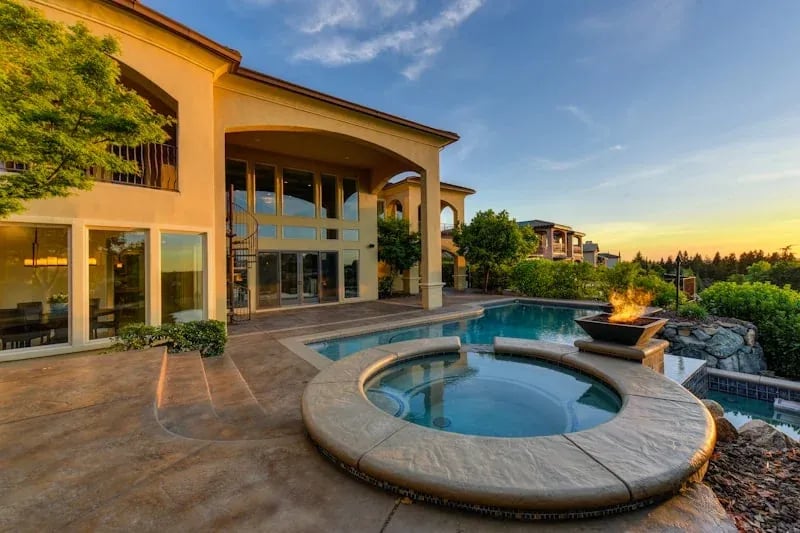
A Florida waterfront home is valued on a different set of levers than an interior lot. Frontage and lot depth matter. So does water orientation, the physical condition of any dock or seawall, and the era and type of construction. So does how much of the site's value sits in the land rather than the structure. Florida property appraisers work from a statutory list of these factors, and county appraisers apply distinct front-foot rates to waterfront land specifically. A comparative market analysis weighs all of it together, because in our experience few waterfront properties have enough truly similar recent sales nearby for a simpler model to work well.
This describes how value is assessed and estimated, not a promise about what any specific property is worth. A comparative market analysis, discussed below, is an informed opinion, not a formal appraisal, and it is never presented as one.
What Florida Law Requires an Appraiser to Consider
Florida statute lists the factors a property appraiser must weigh in arriving at a just valuation. Four of the eight map directly onto what makes a waterfront property distinct. The property's location. Its quantity or size. The cost of the property and the present replacement value of any improvements on it. And the condition of the property 1. Location and size are doing real work on a waterfront parcel, where a few feet of frontage or a few extra feet of depth changes the number in a way an interior lot's dimensions rarely do.
The other statutory factors, highest and best use, income from the property, and net proceeds of a sale among them, matter too, but on a waterfront estate held for owner-occupancy rather than for income, they tend to move less than the four discussed above 1.
Lot Depth and Frontage
Waterfront land is not valued the way interior land is. County valuation manuals set specific units of comparison for it, per front foot or per effective front foot for ocean, river, and canal frontage, rather than the flat per-lot or per-acre methods used inland 2. Frontage is the width of the parcel along the water, and it is priced directly: more frontage is not simply more land, it is more of the specific dimension the market is actually paying for.
Depth interacts with frontage rather than adding to it in a straight line. Brevard County's own valuation manual lays out a worked example: for a 250-foot ocean-front lot where the typical lot in the area is 100 feet, the first 100 feet of frontage is valued at the full market rate, the next 100 feet at 75 percent of that rate, and anything beyond that at 50 percent 2. An oversized waterfront lot is worth more than a typical one, but not in direct proportion to its extra footage.
This is precisely the calculation that matters most for a coastal parcel purchased decades ago, in Stuart and elsewhere along this coast, where lots were commonly platted larger and deeper than what is typical on the same stretch today. A large lot is not simply worth more in proportion to its size; the depth-factoring method above is what actually sets how much more.
Water Orientation: Front, View, and Access Are Priced Differently
Not all waterfront is the same waterfront, and Florida county appraisers classify it that way. Brevard County alone maintains separate land classifications for, among others, ocean front, ocean view, ocean view (limited), ocean access, river front, river view, river access, canal front, and a distinct "waterfront dock site" category 2. Each classification carries its own rate.
- Front: the parcel's own frontage directly on the water
- View: a sightline to the water without direct frontage
- Access: a right or path to reach the water without either owning the frontage or having a clear view from the structure
- Dock site: frontage specifically improved with, or suited to, a private dock
A buyer comparing two listings described loosely as "waterfront" is often comparing across these categories without realizing it, which is one reason two waterfront homes at similar price points can carry very different underlying land values. A canal lot with access to open water through a channel is priced differently from direct ocean frontage, and a river-front parcel differently again, because each represents a different physical relationship to open water, not simply a different label on the same thing.
Dockage and Seawall Condition
A dock's condition and capacity, and a seawall's structural condition, are physical facts that affect what a buyer's inspection and due diligence turn up, and by extension what a buyer is willing to pay. A recently rebuilt or well-maintained seawall represents capital that has already been spent; an aging or visibly deteriorating one represents capital a buyer should expect to spend, and buyers price that difference into an offer.
The same logic applies to a dock. Its size, load capacity, and physical condition are part of what a survey and a structural inspection document, and they belong in the same due-diligence conversation as the seawall. That conversation is handled by the buyer's own inspectors and the seller's disclosure obligations, rather than characterized by us in marketing copy.
A seawall or dock repaired before a home comes to market removes an open question a buyer would otherwise have to price into an offer. The reverse is also true: a visibly deteriorating structure invites a buyer's own contractor estimate into the negotiation, on the buyer's terms rather than the seller's.
Build Era and Construction Type
The statutory factors above include the cost of the property and the present replacement value of its improvements, alongside the property's condition 1. In practice that means the year a home was built, and what it was built with, matter independently of the land beneath it. A newer structure carries a different present replacement value than an older one of similar size, and a home's documented condition, systems replaced, structural work completed, feeds the same statutory factor.
This is also where records matter over a long holding period. A permit history that shows what was rebuilt, and when, gives both a county appraiser and a prospective buyer a clearer basis for judging present condition than the home's age alone.
Construction techniques and materials used along the Florida coast changed considerably between, for example, a home built in the 1970s and one built in the 2000s, and those differences show up directly in the present replacement value factor an appraiser applies 1, independent of how well either home has been maintained since.
Land-to-Improvement Ratio
On many Florida waterfront properties, the land itself, not the structure sitting on it, carries the larger share of the total value, and county valuation practice has a specific way of reasoning about that split. Brevard County's manual describes a site coverage ratio, the building's footprint divided by the size of the lot, used to identify when a site is carrying more land than its structure actually uses, land the manual treats as excess or surplus and values on its own terms 2.
For a waterfront estate on a generous lot, this is often the largest single reason two homes with similar square footage carry very different valuations: the land underneath, and specifically the waterfront portion of it, is doing more of the work than the house.
The underlying math holds whether the property is a home or a commercial building: divide the structure's footprint by the size of the lot, and compare that ratio against what is typical for similar sites nearby. A wide gap between the two is what tells an appraiser, or a broker preparing a market analysis, that a meaningful share of the parcel's value sits in land the structure does not actually occupy, which is common on estates platted decades ago on lots larger than what is typically cut today 2.
“On a waterfront lot, the land is not the backdrop to the house. Often it is the larger part of the number.”
What an AVM Is, and Why Regulators Require Oversight of It
An automated valuation model, an AVM, is a computerized model that estimates a property's value from data, most often recent comparable sales 3. Federal regulators require mortgage originators to apply quality control standards to AVM output specifically to "ensure a high level of confidence in the estimates produced," including random sample testing and review 3. That requirement is itself an acknowledgment that an AVM's raw output needs independent scrutiny before anyone relies on it.
The same federal rule expressly reaches AVMs used to decide whether to waive an appraisal requirement when a loan is sold into the secondary market 3. That is precisely why the quality-control safeguards matter: an AVM's estimate can stand in for a human appraiser's opinion in a real transaction, not merely inform one.
Waterfront is where that data dependence bites hardest. In our experience marketing this segment, waterfront and barrier-island properties typically have few recent sales nearby that are genuinely comparable, once frontage, water orientation, dock condition, and build era are all accounted for. A thin comparable set is exactly the condition any sales-comparison model performs worst under.
A Comparative Market Analysis and an Appraisal Are Not the Same Thing
What we prepare instead is a comparative market analysis: a study of recent comparable sales, the listings currently competing for the same buyer, and the specific characteristics covered above, assembled into a considered opinion of where a property sits in the current market. Under Florida law, that analysis, or any broker's price opinion, may not be referred to or construed as an appraisal 4. An appraisal is a distinct, credentialed service performed by a certified or licensed appraiser under a separate section of the same statute 5, and a broker who blurs that line risks discipline under the chapter that draws it 6.
None of the three tools substitutes for the others.
- An AVM is fast and inexpensive, but it leans entirely on data density.
- A comparative market analysis adds a broker's direct knowledge of the property and the listings competing for the same buyer.
- A formal appraisal is the credentialed opinion a lender or a court ordinarily requires.
Each has its place, and Florida law is specific about which one a broker may perform and what it may be called 46.
None of this substitutes for walking the property. A comparative market analysis grounded in the factors above, frontage, orientation, dock and seawall condition, construction, and land-to-improvement ratio, gives an owner a considered starting point, not a guarantee. If the reason you are weighing a sale is the size of the gain rather than the property itself, capital gains tax on selling a Florida second home covers the federal side. If you are moving within Florida, Florida homestead portability when you sell covers what happens to your Save Our Homes benefit. For a closer look at how comparable sales work on a barrier island specifically, see why comparable sales work differently on a barrier island. When you are ready for an in-person walkthrough and a market analysis specific to your property, our seller representation is where that conversation starts.
Sources
- Florida Statutes s. 193.011, F.S.: the eight statutory factors a property appraiser must consider in arriving at just valuation, including location, size, cost and present replacement value, and condition
- Brevard County Property Appraiser: Land Valuation Manual (front-foot/effective-front-foot waterfront rate methodology, ocean/river/canal front vs. view vs. access site classifications, depth-factoring example, excess/surplus land and site coverage ratio)
- Consumer Financial Protection Bureau: Quality Control Standards for Automated Valuation Models, final interagency rule (AVM definition; required quality-control standards, including random sample testing and review, to ensure confidence in AVM estimates)
- Florida Statutes s. 475.612(3), F.S.: a comparative market analysis or broker price opinion may not be referred to or construed as an appraisal
- Florida Statutes s. 475.611, F.S.: statutory definition of "appraisal" and "appraisal services"
- Florida Statutes s. 475.25(1)(e), F.S.: a licensee who has violated any provision of chapter 475 is subject to discipline, which is the hook that gives the comparative-market-analysis rule in s. 475.612(3) its teeth