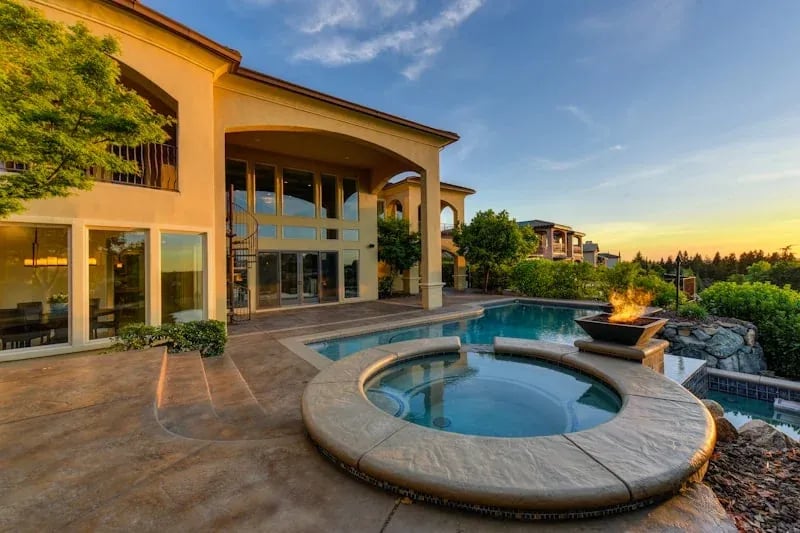
A luxury home does not arrive on the market in a day. The stretch between a seller's first decision to consider selling and the first scheduled showing is usually measured in weeks, and the work done in those weeks tends to shape how the whole process runs. This is a plain walkthrough of that sequence on Florida's Atlantic coast: what happens at each stage, and what a seller can do to make the next stage easier. It is written for owners of barrier-island and waterfront homes who want to understand the process before they are inside it.
The first conversation
Most sales begin with a single conversation, sometimes a year before a home is listed. We call it a listing consultation. It is not a commitment to sell, and it is not a sales pitch. It is a working session to understand the home, the household, and the timing, and to walk through what the process would actually look like for this specific property.
A seller does not need to prepare much for it. Bring the basic facts of the home as you know them: the year built, the major renovations, the systems that have been replaced, anything a buyer would reasonably ask about. Bring the timing you are working toward and any constraints around it. The rest is our job to gather.
If both sides decide to proceed, the working relationship is set down in writing. In Florida that is typically a written listing agreement, one of the standard forms maintained by Florida Realtors and revised as state law and multiple-listing policy change 1. Real estate brokerage in Florida is regulated by the Florida Real Estate Commission under the Department of Business and Professional Regulation 2, and the terms of representation are disclosed in that agreement rather than left to assumption. We work on a flat-fee structure, disclosed in writing before anything is signed, so a seller knows the arrangement at the outset.
Preparing the home, and the paperwork
With the relationship set, two kinds of preparation run in parallel: the home itself, and the documents behind it.
The home comes first because it is the more visible half. For most coastal properties this means a thorough clean, a round of small repairs that have been deferred, and enough clearing of personal clutter that a visitor can see the rooms rather than the contents. Staging is optional and property-specific; a well-kept home in a strong setting often needs less of it than sellers expect. The goal is not to remake the house. It is to present it plainly at its best.
The paperwork is the quieter half, and gathering it early prevents a scramble later. The set we ask sellers to locate usually includes the boundary survey, floor plans if they exist, records of major permitted work, and the maintenance history of the home's systems. For homes inside a community association or a club, the governing documents and any membership materials belong in the same folder. Building permits and many property records are public records in Florida, open for inspection under state law 3, but having your own copies on hand is faster than requesting them in the middle of a transaction.
Florida transactions also run on a set of standard forms, including a seller's property disclosure 4. What a seller is legally required to disclose is a question for your attorney, not something for a broker to characterize. Our role is to make sure the documents are assembled and the right professionals are brought in early, so nothing surfaces as a surprise once a buyer is at the table.
Pricing as a process, not a promise
Pricing a luxury home is a process, and it is worth being clear about what that process is and is not. We prepare a comparative market analysis: a study of recent sales of comparable homes, the listings currently competing for the same buyer, and the specific characteristics of the property, assembled into a considered opinion of where the home sits in the current market.
Under Florida law a comparative market analysis is not an appraisal and may not be presented as one 5. It is the broker's informed read of the market, not a formal valuation and not a prediction. We do not promise a price, and no responsible market opinion pretends to. Markets move, buyers are particular, and a coastal home's standing turns on details a spreadsheet flattens: the depth of an oceanfront lot, the orientation to the water, the build era, the condition of the dock. What the analysis gives a seller is a grounded starting point and the reasoning behind it, so the list-price decision is made with information rather than hope.
“A comparative market analysis is a considered opinion, not a prediction. It gives a seller a starting point and the reasoning behind it, nothing more and nothing less.”
Bringing a coastal home to market
Marketing a barrier-island or waterfront home is where the character of the property has to come through, and it starts with the photography. Every home we list is photographed professionally, with aerial cinematography where the setting calls for it. We do not use wide-angle phone images or recycled stock. The images are commissioned to match the register of the home.
The listing narrative matters nearly as much as the images. A coastal home is not a spec sheet; it is a place, and the written presentation should tell a buyer what it is actually like to live there, in plain and accurate terms. We write it to inform, not to inflate.
Once a listing is ready it is placed on the Multiple Listing Service and syndicated to the major consumer platforms. Recent updates to the standard Florida listing forms give sellers defined choices about how and where a listing is published 1, and those choices are discussed and set before anything goes live. A seller may also choose to delay or limit public marketing. Those paths are set out in the listing agreement, follow the rules of the local MLS, and require the seller's written informed consent.
Showings, and what to expect
With the home on the market, showings begin. For a luxury property most are private and scheduled, shown to specific buyers and their agents rather than to open-house foot traffic, though a curated open house has its place for the right home.
The practical ask on a seller is patience and readiness. The home should be showing-ready on short notice, which means the clean-and-clear discipline from the preparation stage has to hold. Expect some disruption to daily life; it is temporary, and it is how a buyer falls for a house. We handle scheduling, we accompany or coordinate access, and we gather feedback after each visit so a seller can see how the market is responding in real terms rather than in the abstract.
The path to contract
When a buyer is ready, they present an offer, and the negotiation that follows covers price, timing, contingencies, and the many smaller terms that make up a contract. We represent the seller's interest through all of it.
From there, the contract itself, the title work, and the closing are handled with the appropriate professionals: a title company or a real estate attorney, and the seller's own counsel on any legal or tax question. The Florida Bar describes closing a real estate transaction as a technical procedure best carried out with qualified help 6, and we coordinate closely with those professionals rather than standing in for them. A broker's job at this stage is to keep the transaction moving and to make sure the seller understands each step, not to give legal or tax advice.
That is the arc, from a first quiet conversation to a signed contract. The weeks before the first showing are where a good, calm sale is built, and a seller who understands the sequence walks into it with far less friction than one who does not.
If you are considering selling a home on the Treasure Coast or the Space Coast, the most useful first step is a listing consultation: a conversation about the home, the timing, and what the process would look like for you, with no obligation attached. You can read how our seller representation works, or reach us directly to begin. For a broader view of the Atlantic-coast market, our search platform lives at maxxcityhomes.com.
Sources
- Florida Realtors: Florida Realtors Rolls Out New, Updated Forms (standard listing agreement forms; MLS options for sellers)
- Florida Real Estate Commission (FREC), Department of Business and Professional Regulation
- Florida Statutes s. 119.01: general state policy on public records (records open for inspection)
- Florida Realtors: A Look at Florida Realtors Forms and Their Descriptions
- Florida Statutes s. 475.612(3): a comparative market analysis or price opinion may not be construed as an appraisal
- The Florida Bar: Consumer Pamphlet, Buying a Home (closing procedure)