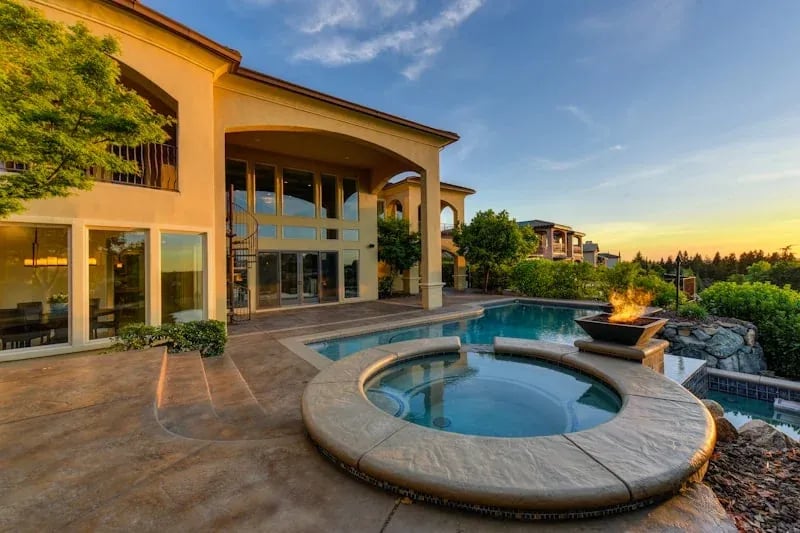
A luxury coastal home that has not sold is explained by mechanics, not mystery. In nearly every case the cause sits in one or more of a short, specific list: the price against a thin set of comparable sales, the quality of the presentation and photography, or how a narrow buyer pool behaves. It can equally be friction somewhere in the showing process, a listing narrative that does not match what a buyer finds in person, or a condition item that surfaced later than it should have. Each of these is diagnosable on its own terms, separately from the others. The diagnosis, not the calendar, is what should drive the next decision.
Price, Against What Has Actually Sold
Price is the first place to look, and it is rarely a simple question of too high. At the top of a coastal market the pool of genuinely comparable sales is small, so a single recent closing, or the absence of one, can shift where a home actually sits relative to its listed price without anyone having changed a number. A price that was defensible against the comparable set six months ago can be out of line today for reasons that have nothing to do with the house.
A broker's pricing guidance, formally called a comparative market analysis, is a study of recent comparable sales, the active competition, and the property's own characteristics. Florida law is specific that a comparative market analysis or price opinion is not an appraisal and may not be presented as one 1, because it is a considered read of the market rather than a certified valuation. Real estate brokerage in Florida, including the framework a listing operates inside, is regulated by the Florida Real Estate Commission 2. None of this makes a pricing opinion wrong when it is made. It means the opinion has a shelf life, tied to the comparable set it was built on, and that set keeps moving whether or not the listing does.
- Showings happen and the feedback consistently references the number, not the house itself.
- A genuinely comparable home closed recently at a level your listing has not adjusted toward.
- Requests to view have slowed even though the property has not changed.
- Buyers tour once and do not ask for a second visit, a follow-up call, or additional documents.
Presentation Against the Property's Tier
At the top of the market, a buyer's first real decision happens in the photographs, before a showing is ever requested. If the photography, the room-by-room presentation, or the written description reads a tier below the price, the pool of buyers who convert from browsing the listing to requesting a showing shrinks quietly, without producing any single visible sign a seller would notice from the outside.
Florida's advertising rule for real estate licensees requires that no advertisement placed by a licensee be fraudulent, false, deceptive, or misleading. It further requires that every real estate advertisement include the licensed name of the brokerage firm, and that on a website that name sit adjacent to the point of contact information 3. A listing is an advertisement, so this is the regulatory floor. It also points at the same principle presentation quality runs on above that floor: what is shown has to hold up against what a buyer eventually finds. Photography that under-represents a property, or a written narrative that reads generic rather than specific to the home, does not just look thin on a screen. It fails to give a buyer a reason to choose this listing over the other homes competing for the same attention in the same price band that week.
How a Narrow Buyer Pool Behaves
A home priced well into seven or eight figures is not competing for attention the way a median-priced home does. The number of households who can transact at that level, in that specific location, is small by definition. The pattern of activity looks correspondingly different: fewer total showings, longer gaps between serious lookers, and each interested party carrying disproportionate weight in what the activity level actually tells you about demand.
Statewide, across all single-family price points, Florida Realtors reported a months supply of inventory of 4.8 months in March 2026, down from 5.5 a year earlier, with homes reaching contract in a median of 51 days and selling at a median of 95.4 percent of original list price 4. Those figures describe the broad market, not the narrow band a coastal estate competes in, and no comparable statewide figure exists for that band alone, because too few transactions occur at that level in any given month to produce a stable one. In a defined micro-market like Vero Beach or along a stretch such as Stuart, the count of genuinely comparable closings in a twelve-month window can be small enough that a single sale changes the picture. The honest read for a narrow price band is not a single number borrowed from the wider market. It is the pace of the specific comparable set a given property actually competes against, tracked over a longer window than ninety days, a dynamic we have written about separately in why comparable sales behave differently on a barrier island.
“A stalled listing is not a verdict on the house. It is a set of mechanics, and each one is diagnosable on its own terms.”
Friction in the Showing Process
A buyer who wants to see a home has a narrow window of motivation, and every point of friction between that interest and an actual showing costs some of it. None of this is a judgment about how a listing was handled; access friction accumulates from a dozen ordinary causes. Slow response to a showing request, inconsistent access windows, or a property that is not consistently show-ready all reduce the number of interested parties who convert into a walkthrough. A reduced showing count is often mistaken for a lack of buyer interest, when the underlying cause is a process problem rather than a demand problem.
This is worth separating cleanly from price and presentation, because the fix is entirely different. A home can be correctly priced and well photographed and still show poorly if getting inside it is hard. The practical questions are operational, not analytical. How quickly is a showing request confirmed? How flexible are the access windows, relative to how buyers actually move through a market, often on a compressed visit covering several homes in a day? And is the property genuinely ready to be seen on short notice, rather than only by appointment days out?
Out-of-state and international buyers add a specific version of this problem, and coastal Florida sees a meaningful share of both. A buyer flying in for a single weekend may be trying to see three or four properties in that window, and a listing that cannot accommodate a same-week request, or that requires an unusually long lead time to confirm access, simply drops off that itinerary. That buyer does not necessarily lose interest in the home. They lose the trip.
Where the Listing Narrative and the Walkthrough Diverge
A listing narrative sets an expectation, and a showing either confirms it or breaks it. When the written description reaches for more than the property delivers, whether in scale, condition, or setting, a buyer who arrives and notices the gap does not simply adjust their expectations downward. The gap itself becomes the thing they are thinking about, rather than the house, and that is difficult to recover from inside a single visit.
A narrative that no longer matches the property is usually a drift problem rather than an authorship one. A home changes, a market changes, and copy written months ago describes a property that has moved underneath it. An accurate narrative is also simply the better approach at this tier, because the buyer pool is small enough that a single disappointed showing can be a meaningful share of a given quarter's demand. The corrective is not to undersell the home. It is to describe what is actually there, specifically and accurately, so that a showing confirms the narrative rather than contradicts it.
Condition Items That Surface Late
A condition item that surfaces during a buyer's inspection, rather than being addressed before the home was ever shown, is one of the most common places a transaction that appeared to be moving stalls out entirely. From the outside this looks identical to a listing that never generated interest. The underlying mechanic is different: interest existed, a contract may even have existed briefly, and the sale ended at inspection rather than at showing.
Florida's standard AS IS residential contract gives a buyer a defined inspection period, fifteen days if the contract does not specify otherwise, during which the buyer may inspect the property and cancel if not satisfied 5. The same standard form has the seller certify that they know of no undisclosed facts materially affecting the property's value that are not readily observable 5. A roof, a seawall, a mechanical system, or an elevator that has not been reviewed ahead of a listing is not necessarily a disclosure problem. It is often a timing problem: whatever a buyer's own inspector is going to find, finding it before the home is shown is always better than finding it after an accepted offer.
The practical fix is sequencing rather than disclosure strategy. A walk-through of the home's major systems before the first photograph is taken, covering the roof, the seawall or dock if the property has one, the mechanical and electrical systems, and any specialized equipment particular to the home, does not eliminate what an inspection later turns up. It simply means the seller already knows, and can decide how to address it or price around it, before a buyer does.
What Does the Showing Feedback Actually Tell You?
Feedback after a showing is data, and the pattern across several showings is more informative than any single comment read in isolation. Laid out as a set rather than one email at a time, feedback usually points toward one of a small number of causes, and the pattern is often clearer than it looks in the moment.
- Showings occur, feedback consistently references price, and no offer follows: usually a pricing issue.
- Online interest is steady but showing requests stay thin: usually a presentation or exposure issue.
- Buyers tour once, comment on a specific room or system, and do not return: usually a presentation or condition issue.
- Multiple showings, generally positive comments, and still nothing: worth a fresh look at the whole picture rather than any single factor in isolation.
None of this is diagnosed from the outside, and a stalled listing rarely has a single cause. What it has is a pattern. That pattern becomes legible once the price, the presentation, the buyer pool, the showing process, the narrative, and the condition of the home are looked at one at a time rather than as one undifferentiated problem. If your listing agreement has already run its course, what happens next is a defined process, not a blank page. If you want a fresh, private read on where a specific property sits against what has sold, that conversation starts with a private valuation. Our broader look at how long homes at this level take to sell in Florida is a useful next read.
Sources
- Florida Statutes s. 475.612(3) (2025): a comparative market analysis or price opinion may not be construed as an appraisal
- Florida Real Estate Commission (FREC), Department of Business and Professional Regulation
- Florida Administrative Code R. 61J2-10.025, Advertising: no advertisement may be fraudulent, false, deceptive or misleading; every real estate advertisement must include the licensed name of the brokerage firm; on a website that name must appear adjacent to or immediately above or below the point of contact information
- Florida Realtors: Monthly Market Summary, Single-Family Homes, Florida, March 2026 (median time to contract, percent of original list price received, months supply of inventory)
- Florida Realtors / Florida Bar: AS IS Residential Contract for Sale and Purchase, redlined comparison of the current revision, which is the version Florida Realtors publishes publicly (inspection period and right to cancel; seller disclosure of material facts)